Pinacoteca Ambrosiana
Plan an art visit that pairs a major collection with the historic centre.
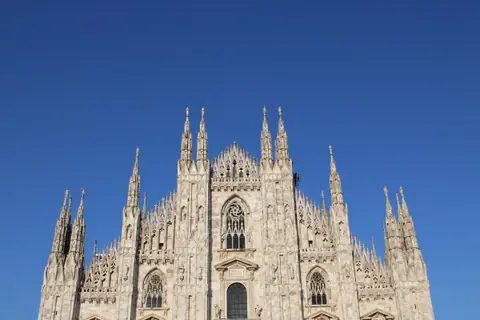
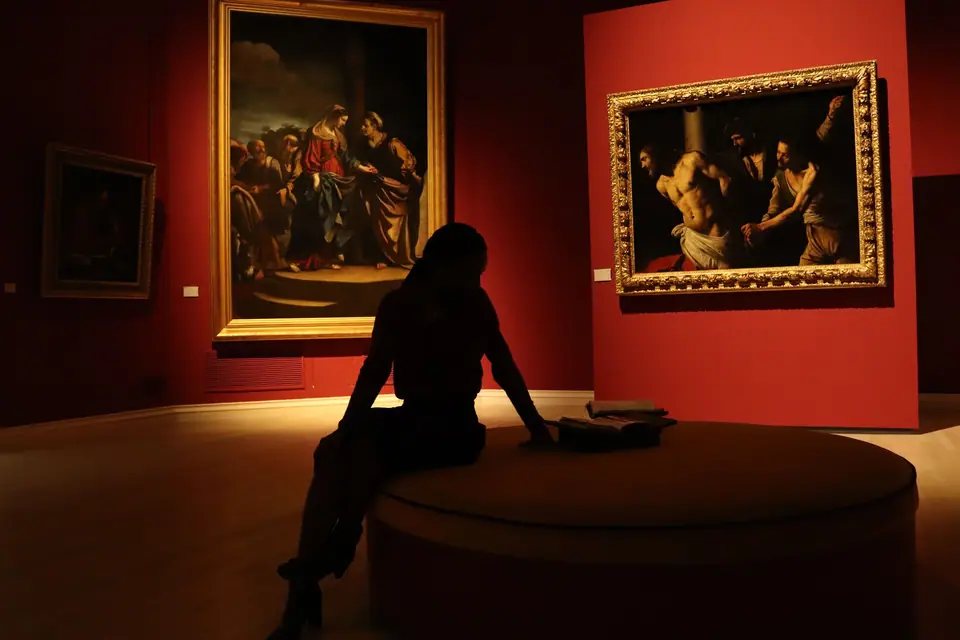
The Biblioteca and Pinacoteca Ambrosiana is one of Milan's oldest cultural institutions and one of its most rewarding smaller museums. Cardinal Federico Borromeo, archbishop of Milan, founded the library in 1609 as one of the first in Europe open to the public, and added a picture gallery in 1618 to train artists by example. The building stands on Piazza Pio XI, a few minutes' walk from the Duomo, yet it is often calm when the cathedral square is crowded.
Caravaggio's basket of fruit
The gallery's most famous painting is Caravaggio's Basket of Fruit, painted around 1599. It is one of the earliest independent still lifes in Italian art: a woven basket on a ledge, holding grapes, figs, an apple with a worm hole and leaves that are already drying. We like to stand back and then come close, since the detail is extraordinary and the subject is more melancholy than it first appears.
Raphael's great cartoon
A darkened room holds Raphael's preparatory cartoon for the School of Athens, the fresco in the Vatican. Drawn in charcoal on many joined sheets of paper, it is the largest Renaissance cartoon to survive and shows the philosophers at life size. Seeing the drawing allows you to follow Raphael's thinking in a way the finished fresco does not; the architecture behind the figures was added only on the wall in Rome.
Leonardo at the Ambrosiana
Leonardo's Portrait of a Musician, his only surviving male portrait on panel, hangs here. The library also owns the Codex Atlanticus, the largest collection of Leonardo's drawings and notes, covering machines, weapons, flight, hydraulics and anatomy. Pages are shown in rotating displays, often in the Sala Federiciana, the historic reading room with its tall shelves and wooden galleries. Which sheets are on view changes through the year, so each visit can be different.
Other highlights
The collection includes Titian, Botticelli, Bernardino Luini and Jan Brueghel the Elder, whose small, detailed paintings of flowers and landscapes were favourites of the cardinal. Some rooms keep their historic display, with paintings close together on the walls, which gives the gallery the feel of a collector's house rather than a modern museum. The courtyards and staircases are decorated with statues and inscriptions that recall Borromeo's educational ideals.
The library behind the gallery
The Ambrosiana was founded as a centre of learning, and the library remains active for scholars, who work in reading rooms closed to general visitors. Borromeo sent agents across Europe and the Near East to buy manuscripts, and the collection grew to include Greek, Latin, Arabic and Syriac texts, early printed books and drawings. A college of scholars, the Doctors of the Ambrosiana, was established to study them, and that tradition of research continues today. For visitors, the sense of a working institution adds weight to the paintings on the walls.
Our view
The Ambrosiana suits visitors who enjoy depth over scale. We give it a focused hour or two: Caravaggio, Raphael's cartoon, the Leonardo portrait and whatever pages of the Codex are on display. It pairs naturally with a morning at the Duomo and a walk to San Maurizio, or with the modern collection at the Museo del Novecento for a contrast. If the Last Supper is sold out on your dates, the Ambrosiana is the place in Milan where Leonardo's own hand feels closest.
The museum is compact and well signed, and the rooms are rarely busy, which makes it a comfortable choice on a rainy afternoon. Benches in several rooms invite a longer look, and the shop sells facsimiles of Codex pages. Nearby, Via Torino and the church of San Satiro, with Bramante's painted false apse, extend the visit without a long walk.
Traveller tips
Real advice from people who have been to Pinacoteca Ambrosiana. Every tip is read by our team before it goes live.
No tips yet. Been here? Yours could be the first.
Thank you! Your tip will appear here after a quick review.
More in Milano
Continue exploring Milano with related neighbourhood, food, and planning guides