Art Deco Shanghai Guide
Where to find Shanghai's Art Deco landmarks and how to walk between them.
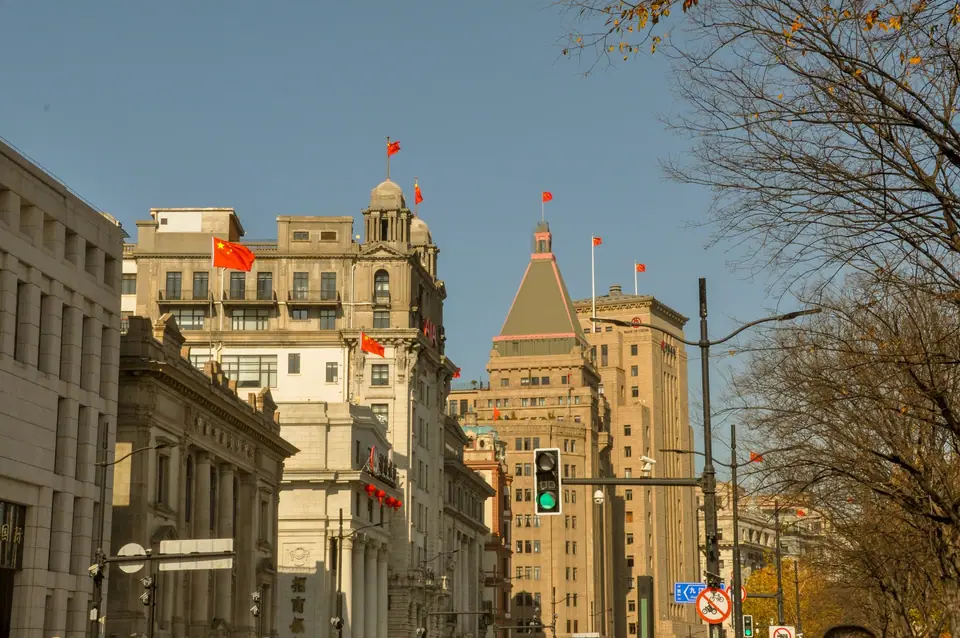
In the 1920s and 1930s, Shanghai was one of the richest and most cosmopolitan cities in Asia, and it built in the fashionable style of the day. Art Deco, with its geometric patterns, stepped towers and sleek lines, left a rich mark on the city, and more of it survives here than in many Western capitals. A walk between the best examples is a simple way to read the city's story in stone.
What Art Deco means here
The style began in Europe in the 1920s and spread around the world, with bold shapes, rich materials and a love of modern machinery. In Shanghai it appeared on hotels, banks, cinemas, theatres, department stores and apartment blocks, and it often mixed with local touches. The mood was one of confidence and speed, which suited a booming trading port that wanted to look like the future.
The Peace Hotel
The most famous example stands on the Bund. It opened in 1929 as the Cathay Hotel and was built for a wealthy businessman, and it has a pyramid roof of green copper above a stepped tower. Inside, the lobby has fine Art Deco details, and a jazz bar has long been a symbol of old Shanghai. Confirm what parts of the building are open to visitors, because access rules vary.
The Park Hotel and the Hungarian architect
A tall hotel on the edge of People's Square was finished in 1934 and was for decades the tallest building in Asia. It was designed by László Hudec, a Hungarian-Slovak architect who worked in Shanghai for many years and left a long list of buildings in the city. He also designed a cinema nearby, and his work shows how Art Deco could be elegant and practical at once.
Apartments and villas
Many of the best Art Deco homes are apartment blocks in the former French Concession, which were built for a growing middle class. Wukang Mansion, with its curved prow, is the star, but there are many more on quiet streets, with rounded balconies, geometric railings and brick or tile facades. Walking the French Concession with your eyes up is the best way to find them.
A simple walking route
Start at the Peace Hotel on the Bund and walk west along Nanjing Road to People's Square, where the Park Hotel and the old cinema stand. Then take a taxi or the metro to the French Concession and finish at Wukang Mansion with a coffee. The whole route can be done in a day, with plenty of stops, and it gives a clear picture of the style.
Sleeping in the style
Several of the grand hotels of the period have been restored and reopened, and staying in one is a vivid way to feel the era. The Peace Hotel reopened after a long renovation in 2010, and other restored buildings now hold hotels, restaurants and offices. Book early, ask for a room with original details when you can manage it, and be ready for modern prices.
What to look for
Look for stepped rooflines, vertical stripes, zigzag patterns, rounded corners and metal details such as railings and doors. Inside, look for geometric floors, curved staircases and decorative lamps. Many buildings have been repaired or altered, so some details are original and some are copies, but the overall effect is strong.
Preservation and change
Shanghai has protected many of its historic buildings in recent decades, and several have been restored and reopened as hotels, shops or offices. Others have been lost to redevelopment, which is why it pays to look now. The lane houses of the same period make a useful companion topic.
What to skip
You do not need to go inside every building, and you can skip the expensive bar if you only want to see the lobby. If you only have an hour, the Bund and the Peace Hotel give the best sense of the style.
Traveller tips
Real advice from people who have been to Art Deco Shanghai. Every tip is read by our team before it goes live.
No tips yet. Been here? Yours could be the first.
Thank you! Your tip will appear here after a quick review.
More in Shanghai
Continue exploring Shanghai with related neighbourhood, food, and planning guides