Maglev and Airports Guide
How to reach the city from Pudong and Hongqiao by maglev, metro or taxi.
Shanghai has two airports and several rail stations, and knowing which one you need saves time and money. Pudong International Airport handles most international flights and lies far to the east, while Hongqiao handles domestic flights and shares a site with the main high-speed railway station on the west side. Both are linked to the city by metro, and Pudong has a famous train that floats above the track.
The maglev train
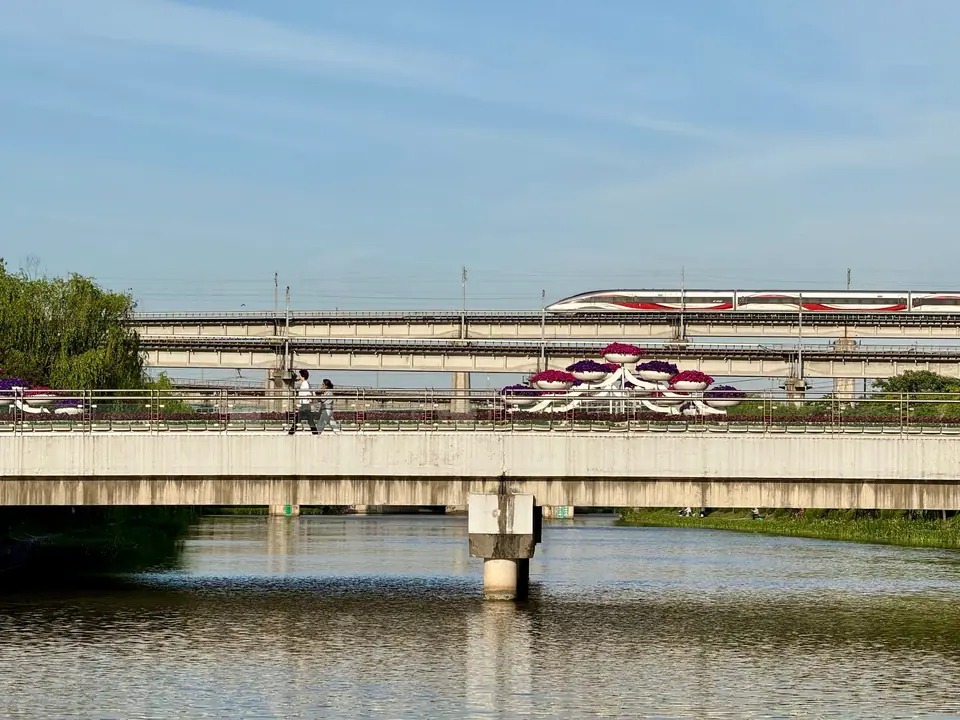
The Shanghai Maglev runs between Pudong International Airport and Longyang Road station, and it covers about thirty kilometres in roughly eight minutes. It uses magnetic levitation, which lifts the train off the track, and it can reach high speeds on some departures. It opened in 2004 and is a thrill to ride, though it does not go all the way to the centre. Look at the timetable and ticket price on the official page.
From Longyang Road to the centre
At Longyang Road, you change to the metro. Several lines meet there, so you can reach many parts of the city without a taxi. A taxi from the station is also easy and cheap, and ride apps work well. The journey to the centre takes about thirty to forty minutes in total. If you are carrying heavy bags, verify the transfer route before you ride, because station walks can be long.
The metro to Pudong
Metro line 2 runs all the way to Pudong International Airport and is a slower but cheaper alternative to the maglev. The ride from the centre takes about an hour, with many stops, and carriages can be crowded at peak times. It suits travellers with plenty of time and little luggage, and it is the cheapest option by far. Check the last train time, because it may leave before late flights arrive.
Taxis and ride apps
A taxi from Pudong International Airport to the centre takes about forty-five minutes to an hour, depending on traffic, and costs far more than the trains. Use the official taxi queue or a ride app, and avoid drivers who approach you in the arrivals hall. Show the driver your hotel address in Chinese, and see that the meter is running. Tolls are added to the fare.
Hongqiao transit hub
Hongqiao Airport and Hongqiao railway station are next to each other, and they are connected by long covered walkways and metro lines. This is the starting point for high-speed trains to Suzhou, Hangzhou and Beijing. The station is vast, so allow extra time to find your platform and your gate. Metro lines 2, 10 and 17 run to the hub.
Timing for flights
Allow plenty of time for international departures, because security and passport control can be slow. Aim to reach Pudong at least three hours before an international flight, and two hours for domestic ones. Traffic on the airport roads can be heavy at rush hour, so build in a buffer, and confirm your terminal in advance.
Arrival tips
Before you travel, set up your payment app, download a translation app and get a data eSIM or roaming plan, because many Western sites and apps do not work without one. Keep your passport handy for immigration and hotel check-in. Entry and transit rules change from time to time, so look up the current requirements before you fly.
Navigating the urban transit network
Once you have arrived, the metro is the simplest way to get around, and each guide on this page names the nearest station for its sight. Taxis and ride apps fill the gaps, and walking is pleasant in older districts. For a long journey, the Lujiazui area is easy to reach on line 2, which also serves Pudong Airport and the science museum.
Alternative transport choices
You do not need to take the maglev if you have heavy luggage and a hotel far from the metro, because a taxi may be simpler. Skip unofficial taxis and anyone who offers you a ride inside the terminal.
Traveller tips
Real advice from people who have been to Maglev and Airports. Every tip is read by our team before it goes live.
No tips yet. Been here? Yours could be the first.
Thank you! Your tip will appear here after a quick review.
More in Shanghai
Continue exploring Shanghai with related neighbourhood, food, and planning guides