Jade Buddha Temple Guide
What the Jade Buddha Temple holds, how to visit and what to expect.
The Jade Buddha Temple is smaller than some of its rivals, but it has the richest interior of Shanghai's major temples and a story that is easy to remember. It was founded to house jade Buddhas that a monk had carried from Burma, and it remains a working temple of the Chan, or Zen, tradition, where monks chant, worshippers burn incense and visitors are welcome to look around quietly.
The story of the jade
According to the temple's own history, a monk named Huigen travelled to Burma and returned with several jade statues, and two of them were kept in Shanghai. A temple was built to house them, and the present halls date mostly from the early twentieth century, built in the style of the Song dynasty after the earlier buildings were damaged. The seated Buddha, in white jade, is almost two metres tall and is the centrepiece. The reclining Buddha is smaller and shown in a calm sleeping pose.
The halls to look for
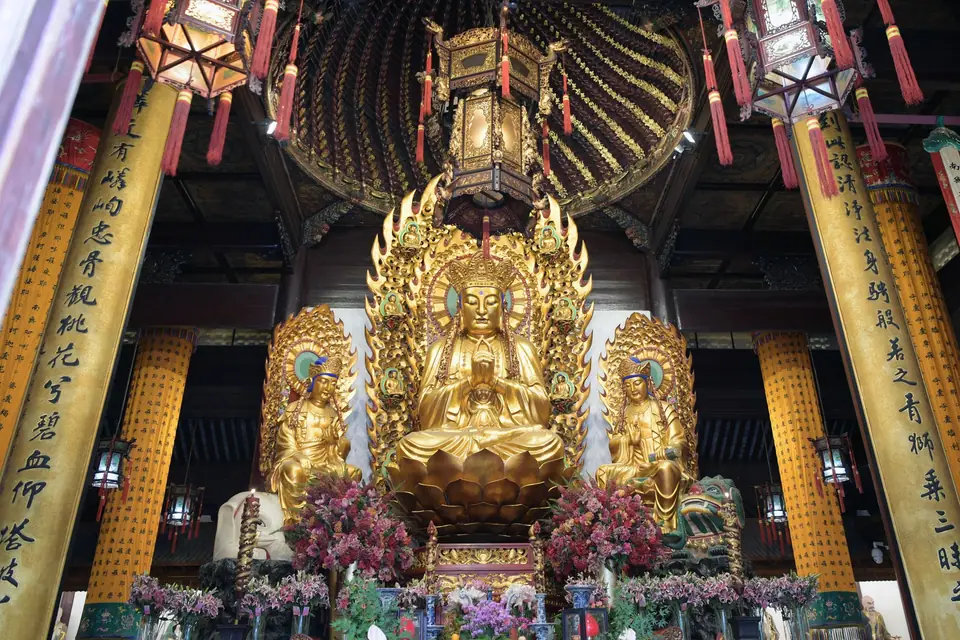
Walk in through the Heavenly Kings hall, where four fierce guardian figures stand beside the entrance, then pass into the main hall with its large gilded images. The jade Buddha chamber is on an upper floor, and the reclining Buddha has its own hall. Look at the roofs, the carved beams and the coloured details, which show typical temple architecture. Bells, drums and old inscriptions add atmosphere.
Tickets and rules
There is an entry fee for the temple and usually a separate ticket for the jade Buddha chambers, so confirm the current prices and hours before you visit. Photography is not allowed in the chambers that hold the jade statues, and there are often staff who enforce the rule. Bags may be checked, and you should switch your phone to silent. Dress modestly, with shoulders and knees covered.
Visiting with respect
The temple is a living place of worship, and visitors are guests. Do not step on thresholds, do not touch statues and do not take pictures of monks or worshippers without asking. If you wish to light incense, you can buy sticks at the entrance, but there is no need to take part. Standing quietly in the courtyard and watching the ritual is enough.
The vegetarian meal
The temple is known for its vegetarian restaurant, which serves meat-free dishes in a style that is common in Buddhist monasteries. Dishes use tofu, mushrooms and vegetables to imitate familiar flavours, and the food can be surprisingly tasty. It is a pleasant lunch and a nice change from heavy food, and it helps to confirm the current opening times, because the restaurant sometimes closes on set days.
Morning hours and seasonal crowds
Weekday mornings are the calmest. Festival days, the Lunar New Year season and the first and fifteenth days of the lunar month bring crowds of worshippers, which is a spectacle in itself, but not a restful one. Late afternoon is quiet, though the halls may close early, so allow time before the doors shut.
Transit connections to the gates
The temple lies in the north of the city, a short taxi ride from the centre. The nearest metro station is on line 7, with a walk of about ten to fifteen minutes. Taxis are cheap, and ride apps will take you to the gate, though a return taxi can be harder to find at closing time.
Combining nearby sights
The temple is close to M50 and the banks of Suzhou Creek, so a morning at the temple and an afternoon in the galleries makes a satisfying day. For a different temple, Jing'an Temple is easier to reach, and Longhua Temple is older and larger.
Options you can skip
You do not need the guided audio if you are happy to look quietly, and you can skip the souvenir shop if you want to avoid inflated prices. If you only have time for one jade chamber, choose the seated Buddha.
Traveller tips
Real advice from people who have been to Jade Buddha Temple. Every tip is read by our team before it goes live.
No tips yet. Been here? Yours could be the first.
Thank you! Your tip will appear here after a quick review.
More in Shanghai
Continue exploring Shanghai with related neighbourhood, food, and planning guides