Longhua Temple Guide
What Longhua Temple offers, from the pagoda to the festival bell.
Longhua Temple is the largest temple complex in Shanghai, and by tradition it is also the oldest. A long local story says it was founded in the third century, though the buildings that stand today are much younger. It has a graceful pagoda, deep red halls and a calm that is quite different from the city outside, and it is far less crowded than the better-known stops on the tourist trail.
The pagoda
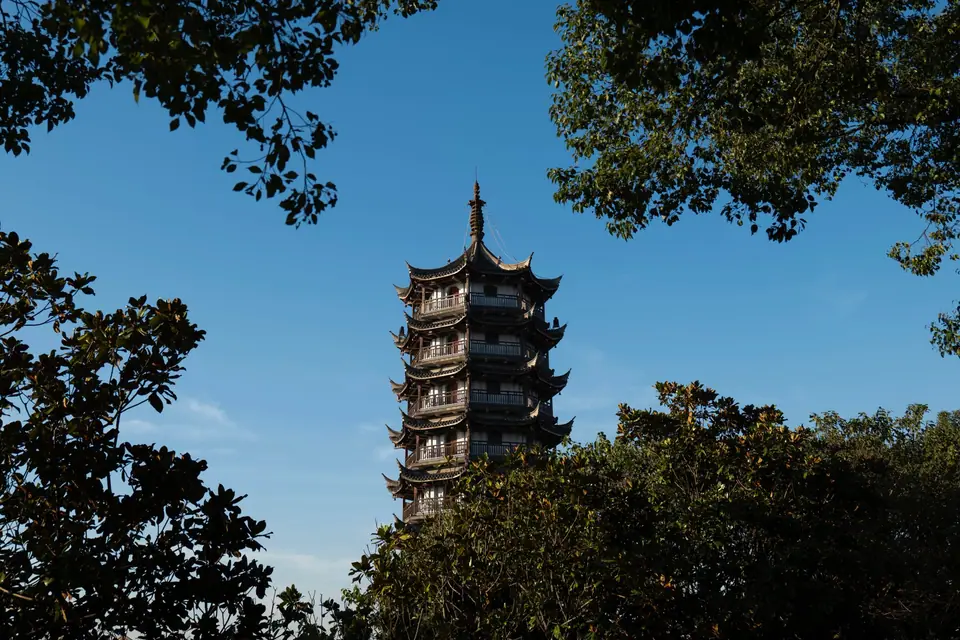
The seven-storey octagonal pagoda is the most recognisable part of the site. Its present form is usually dated to the tenth century, though it has been repaired many times, and it stands about forty metres high with upturned eaves at every level. It is not open to climb, but you can walk around its base and admire the proportions. Late afternoon light on the brickwork is especially lovely.
The temple halls
The temple follows the classic layout of a Chinese Buddhist monastery, with a series of halls arranged along a central axis. A bell tower and a drum tower stand near the entrance, and the main halls hold large gilded statues, incense burners and offerings. Most of the present buildings date from the later imperial period, with repairs and additions in modern times, and they are built in a style that echoes the Song dynasty.
The bell on New Year's Eve
The temple is famed for its bell, which rings out on Lunar New Year's Eve. The tradition is to strike it many times, and crowds gather to hear the sound and to make wishes for the year ahead. It is a thrilling night, but also very busy, with ticketed entry and long queues, so plan ahead if you hope to attend. On an ordinary day the bell is a quiet landmark.
The spring temple fair
Each spring, around the time that the peach and cherry blossoms open, the temple holds a fair. Stalls sell snacks, crafts and local goods, and families come for the festive atmosphere. It is a lively event, and a smart way to see the temple as a part of local life. Dates vary from year to year, so look up the calendar if you want to catch it.
Visiting the monastery
As with every active temple, dress modestly, speak softly and follow the signs about photography. There is a small entrance fee, and opening hours are fixed, so verify them before you go. If you want to light incense, you can buy sticks at the gate, but you are welcome to simply look. A vegetarian restaurant at the site serves simple monastic dishes.
Seasonal timing
Weekday mornings are calm and the courtyards feel peaceful. Weekends are busier, and festival days are very crowded. The temple is also a sound rainy-day choice, because the covered halls give shelter and the wet roof tiles shine.
Transport links and arrival
Longhua Zhong Road station, on lines 7 and 12, is the nearest metro stop, and the temple is a short walk from the exit. A taxi from the centre is also easy. The riverfront galleries of the West Bund are close by, so the two make a solid pairing.
Combining nearby sights
Combine the temple with a stroll to the riverfront and a visit to a museum, such as those described in our West Bund guide. If you want more temples, the Jade Buddha Temple and Jing'an Temple are both rewarding. A park and a memorial cemetery lie near the temple, and they add quiet places to walk.
Minor details to avoid
You do not need a guide for the temple, and you can skip the incense packages sold by touts near the gate. If the pagoda is closed for repairs, you can still enjoy the halls and the courtyards.
Traveller tips
Real advice from people who have been to Longhua Temple. Every tip is read by our team before it goes live.
No tips yet. Been here? Yours could be the first.
Thank you! Your tip will appear here after a quick review.
More in Shanghai
Continue exploring Shanghai with related neighbourhood, food, and planning guides