Suzhou Creek Guide
Suzhou Creek offers walkers routes past old bridges, historic warehouses, and modern art districts.
Suzhou Creek is the modest river that winds through the northern part of Shanghai before joining the Huangpu. It was once a smelly industrial waterway, but a long clean-up and a series of new riverside paths have turned it into one of the nicest walking routes in the city. It is also a quiet way to see the layers of Shanghai's history, from old bridges to converted warehouses.
Where the creek meets the river
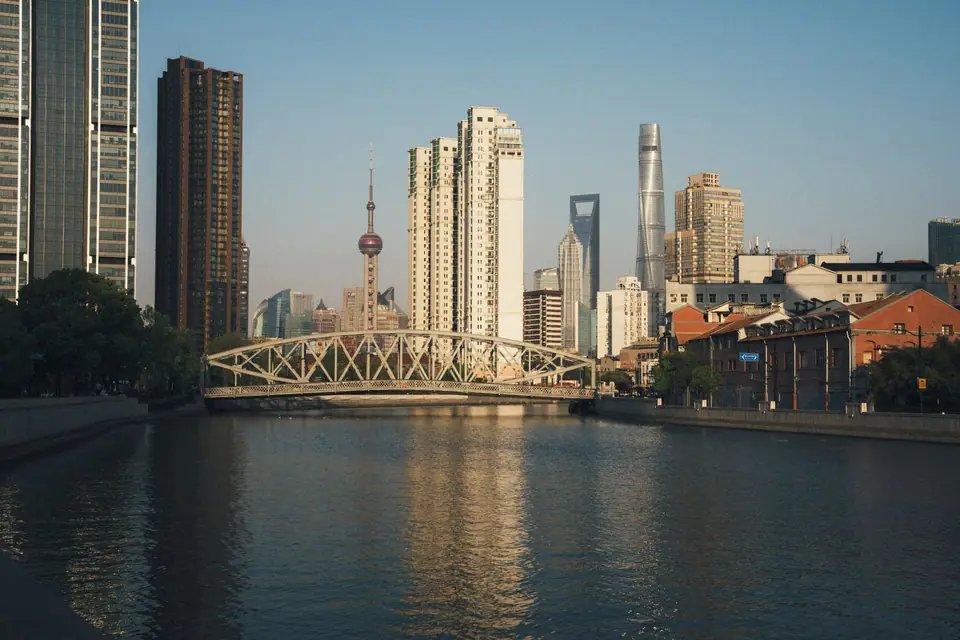
The creek enters the Huangpu just north of the Bund, and the point where the two meet is marked by Waibaidu Bridge. This steel truss bridge dates from 1907 and is often described as the first all-steel bridge in China. After a restoration, it has become a popular spot for photographs, with the Bund on one side and the Pudong towers behind. Walking across it at dusk is a pleasing way to start a creek walk.
The old post office
A short walk west along the creek leads to the old General Post Office, a large building with a grand clock tower and a stately look. Part of it now holds a postal museum, and its roof terrace offers a fine view over the water and the old warehouses. Check opening times before you go, because hours change, and some areas may close for events.
The Sihang Warehouse
Farther along the creek stands a plain brick warehouse with a powerful story. During the battle for Shanghai, a Chinese army unit held the building against attacks. The soldiers became known as the Eight Hundred, though the real number was smaller. The warehouse still bears bullet marks, and a small memorial museum tells the story. It is a sober but important stop on a creek walk.
The riverside paths
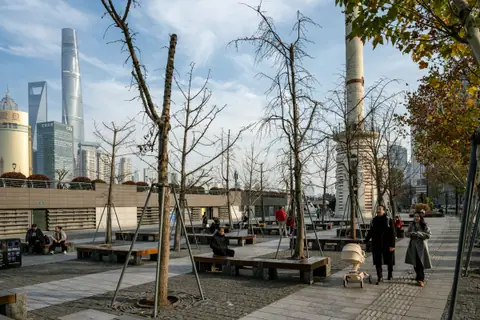
In recent years long stretches of the banks have been opened as continuous paths for walking, running and cycling. The paths are shaded in places and lined with lawns, benches and small cafes. They are at their best in the morning and early evening, when joggers and dog walkers share them with older people doing exercises. The path is flat and easy, and you can walk as far as you like.
Industrial remains
As you go west, old mills, warehouses and chimneys appear, some left empty and some turned into galleries and studios. The M50 art district is the best-known example, and it can be reached by a long walk along the creek. These old buildings are a reminder of the creek's role as Shanghai's industrial artery.
Eating and cycling
Small cafes and snack stalls appear along the path, but they are spaced out, so carry water on a long walk. Shared bikes are common in the city and make light work of the flat path, though you may need a local payment method to unlock them. Pedestrians and cyclists share some stretches, so keep to the side and listen for bells.
Seasonal conditions for walking
Spring and autumn are the most comfortable seasons, with mild air and clear light. Summer evenings are lovely once the heat fades, and winter can be cold and damp. After heavy rain, the water can smell stronger than usual, so choose a dry day if your plans allow.
Access and transit options
The eastern end near Waibaidu Bridge is a short walk from the Bund and from East Nanjing Road metro station. Farther along, several metro stations lie close to the path, so you can start and stop where you like. The creek forms a handy dividing line between the centre and Hongkou.
Shortcuts for limited time
You do not need to walk the whole creek, and you can skip stretches where the path is busy with traffic. If you are short of time, the bridge, the post office and the warehouse together make a fine short walk.
Traveller tips
Real advice from people who have been to Suzhou Creek. Every tip is read by our team before it goes live.
No tips yet. Been here? Yours could be the first.
Thank you! Your tip will appear here after a quick review.
More in Shanghai
Continue exploring Shanghai with related neighbourhood, food, and planning guides