Badaling and Juyongguan Great Wall: Bullet Trains and Mountain Passes
Riding the high-speed train to Badaling Great Wall, choosing the quieter South Slope, and visiting the Juyongguan fortress pass.
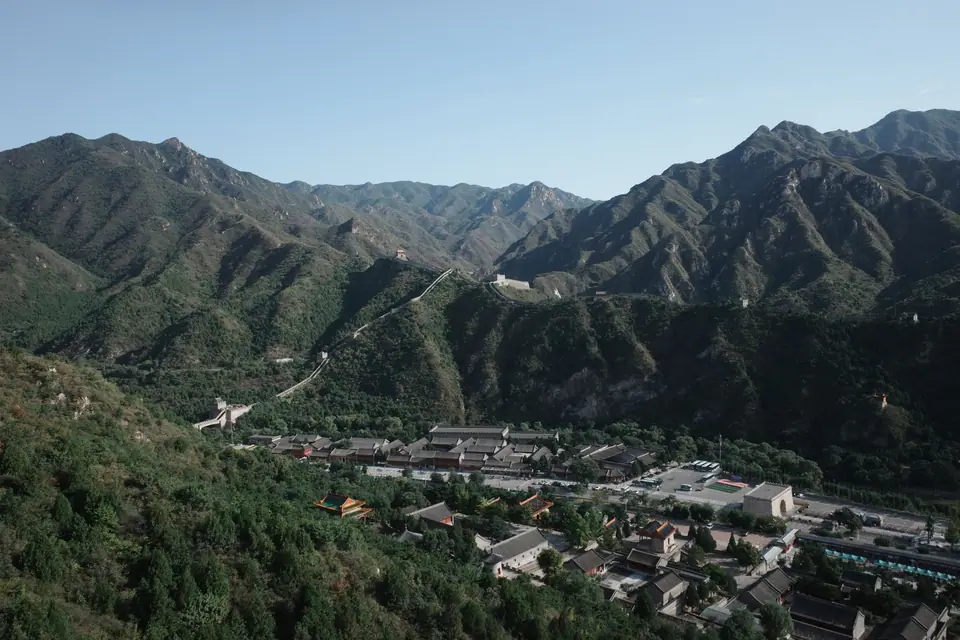
Cutting through the steep Guangou gorge in Changping and Yanqing districts northwest of the capital, Juyongguan Pass and the Badaling Great Wall formed the twin inner and outer locks protecting Ming-dynasty Beijing from northern cavalry incursions. Opened to visitors in the 1950s and visited by dozens of world leaders, Badaling is by far the best-known and busiest section of the wall, yet it also enjoys one huge practical advantage: it has its own underground high-speed railway station right beneath the mountain.
Riding the bullet train to Badalingchangcheng Station
Instead of sitting in weekend expressway traffic, you can board a Fuxing high-speed train from Beijing North Station (at Xizhimen on Subway Lines 2, 4 and 13) or Qinghe Station (Line 13) and step off at Badalingchangcheng Station in around twenty to thirty minutes. Because the rail route is popular with domestic travellers, book your real-name passport train ticket on the official railway app several days ahead, and reserve your Badaling scenic entry slot for the same morning or afternoon window.
South Slope versus North Slope at Badaling
Once you ride the long escalators up from the deep underground station to the valley plaza, the wall splits into two distinct ridges:
- The North Slope (Beilou, Towers North 1 to North 12): the higher, steeper and more famous ridge, culminating at North Tower 8 (Haohanpo, the Hero Slope), the highest point at Badaling. An enclosed cable car also runs directly to North 7 and North 8, which means this side absorbs the bulk of tour groups.
- The South Slope (Nanlou, Towers South 1 to South 7): slightly shorter and gentler in gradient, yet built with identical massive Ming granite blocks and enjoying wide mountain views with less than a third of the foot traffic found on the northern crest. Walking South 1 to South 4 first before crossing over to the North Slope is the smartest crowd-avoidance strategy on site.
Juyongguan Pass and the Yuan-dynasty Cloud Platform
Fifteen kilometres closer to the city down the same canyon stands Juyongguan, a circular mountain valley fortress where the wall loops entirely around a river gorge and military barracks. Even if you prefer Mutianyu for ridge walking, Juyongguan holds an extraordinary treasure at its centre: the white marble Cloud Platform (Yuntai), built in 1342 under the Yuan dynasty as the base for three stupas. Walk through its arched vault to examine intricate fourteenth-century relief carvings of the Four Heavenly Kings and Buddhist dharanis inscribed in six scripts: Sanskrit, Tibetan, Phags-pa Mongol, Old Uyghur, Tangut Xixia and Chinese.
Traveller tips
Real advice from people who have been to Badaling and Juyongguan Great Wall: Bullet Trains and Mountain Passes. Every tip is read by our team before it goes live.
No tips yet. Been here? Yours could be the first.
Thank you! Your tip will appear here after a quick review.
More in Beijing
Continue exploring Beijing with related neighbourhood, food, and planning guides