Nanluoguxiang and the Central Hutongs: Side Lanes and Courtyards
Using Nanluoguxiang as a spine to explore the quiet eight eastern and eight western side hutongs and siheyuan architecture.
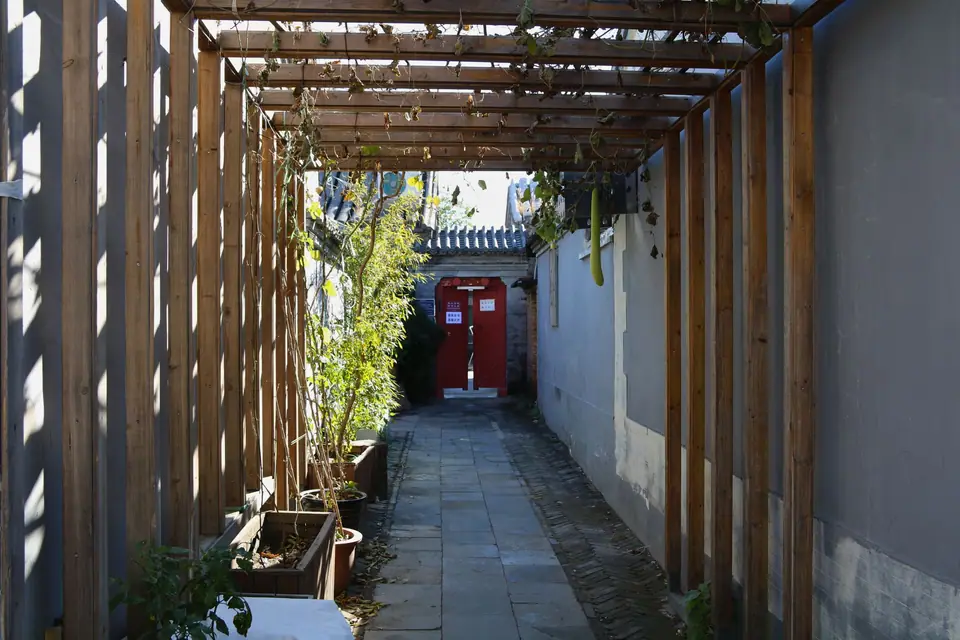
Running eight hundred metres north to south between Gulou East Avenue and Di'anmen East Avenue (with its own station on Subway Lines 6 and 8), Nanluoguxiang (South Gong and Drum Lane) is the best-preserved fishbone grid of thirteenth-century Yuan-dynasty streets in Beijing. If you walk only down the central north-south pedestrian spine on a weekend afternoon, you will find wall-to-wall snack stalls and souvenir crowds. The secret to experiencing this historic quarter properly is treating Nanluoguxiang simply as a ladder: walk thirty metres down any of the sixteen perpendicular side hutongs (eight branching east, eight branching west) and the noise vanishes instantly into quiet grey-brick residential lanes shaded by ancient scholar trees.
Reading a traditional siheyuan doorway
As you stroll the side alleys, look closely at the architecture of the siheyuan (walled four-sided courtyard homes), which still reveal the social rank of their Qing-dynasty owners even when the front gates are closed:
- Gate piers (mendun): the pair of carved stone blocks flanking the wooden threshold. Round drum-shaped stones (baogushi) marked the home of a military commander or high civil official, whereas rectangular box-shaped stones carved with lotus or longevity motifs belonged to scholarly or merchant families.
- Doorway studs (menzan): the hexagonal or cylindrical wooden pegs protruding from the lintel beam above the double doors. Four studs indicated a high-ranking court noble, two studs a mid-tier official, and none a commoner household.
- Spirit walls (yingbi): a carved brick screen standing just inside or opposite the front gate to block direct gazes from the street and deflect bad luck.
Four western and eastern side lanes to walk
Start near the southern end and zigzag northward through the side lanes. On the west side, turn into Mao'er Hutong (Hat Maker's Lane) to pass the stone gates of Kewen Garden (once the mansion of Qing general Ronglu, Numbers 7 to 13) and the former residence of the last Qing Empress, Wanrong (Numbers 35 to 37). One lane north, Suoyi Hutong and Yu'er Hutong lead toward the stone canal bridges of the restored Jade River (Yuhe), which flows down toward the Forbidden City moat.
Branching east off the spine, walk into Dongmianhua Hutong (East Cotton Lane), home to the red-brick campus of the Central Academy of Drama and the extraordinarily detailed three-part floral brick arch carving at Number 15, then finish one lane north in Ju'er Hutong to see architect Wu Liangyong's award-winning modern courtyard housing before emerging near the Drum and Bell Towers.
Traveller tips
Real advice from people who have been to Nanluoguxiang and the Central Hutongs: Side Lanes and Courtyards. Every tip is read by our team before it goes live.
No tips yet. Been here? Yours could be the first.
Thank you! Your tip will appear here after a quick review.
More in Beijing
Continue exploring Beijing with related neighbourhood, food, and planning guides