Prince Gong's Mansion (Gongwangfu): Qing Courtyards and Gardens
Exploring the largest surviving Qing princely estate in Beijing, from its golden-nanmu halls to the bat-motif classical garden.
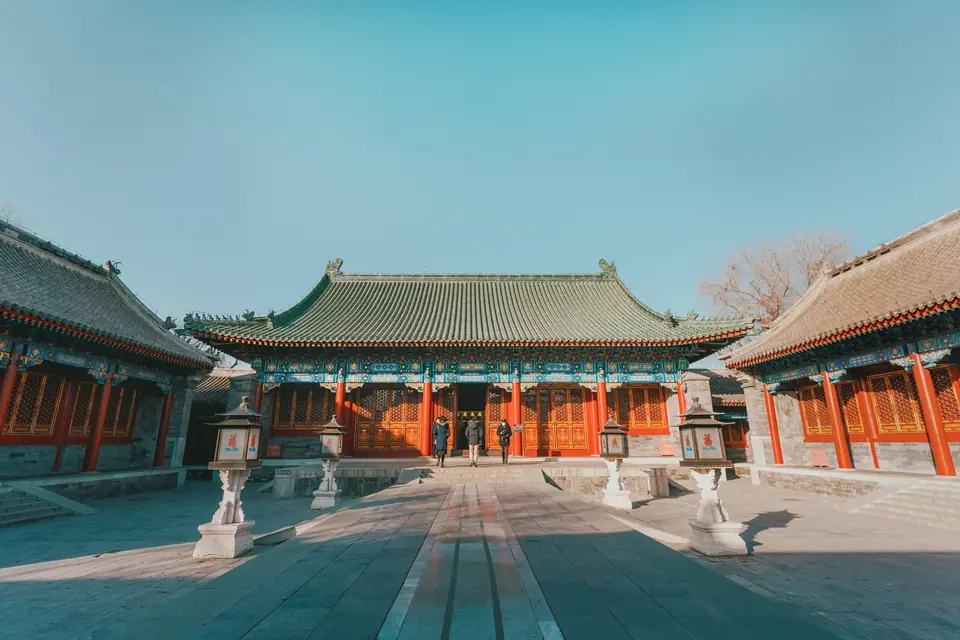
Tucked along Qianhai West Street on the southwest shore of Shichahai (a five-minute walk from Beihai North Station on Subway Line 6), Prince Gong's Mansion (Gongwangfu) is the largest and most completely preserved Qing-dynasty princely estate (wangfu) in Beijing. Covering sixty thousand square metres, split almost equally between thirty residential courtyards in the south and a classical scholar's garden in the north, the mansion has spawned the local Beijing saying: One Prince Gong's Mansion holds half the history of the Qing dynasty.
Three powerful owners: Heshen, Prince Qing and Prince Gong
The mansion was built in 1776 by Heshen, the notoriously wealthy favourite minister of the Qianlong Emperor. So audacious was Heshen that he modelled parts of his private residence directly on the Forbidden City's Palace of Tranquil Longevity and constructed his Western Road halls using priceless golden-thread nanmu wood (jinsinanmu), a rot-resistant timber strictly reserved by imperial decree for the emperor's own palaces and tombs. After Qianlong died in 1799, the new Jiaqing Emperor arrested Heshen for corruption, citing the nanmu halls as one of his twenty capital crimes, and confiscated the estate. In 1851, the Xianfeng Emperor granted the mansion to his half-brother Yixin, Prince Gong, the reformist diplomat who signed the Convention of Peking in 1860 after the burning of the Old Summer Palace and steered Qing foreign affairs for decades.
Ten Thousand Bats, the Kangxi Fu Stele and Grand Theatre
Because the Chinese word for bat (fu, ) is an exact homophone for strong fortune (fu, ), Heshen and Prince Gong wove bat motifs into every corner of the property, reportedly 9,999 painted and carved bats across window lattices, roof beams and stone pond rims:
- Tinlu Hall (Xijinzhai): the two-storey hall built of fragrant golden nanmu pillars on the western residential axis.
- Cuiin Garden and the Fu Stele Cave: inside the artificial Taihu-stone rockery hill of the back garden hides a secret stone chamber housing a stele inscribed with the character Fu written by the Kangxi Emperor in 1673 for his ailing grandmother, Empress Dowager Xiaozhuang.
- The Grand Theatre House (Daxilou): an indoor three-bay wooden Peking opera hall built entirely without iron nails, where wisteria vines are painted across the ceiling and large water vats sit beneath the stage floor to amplify the singers' voices naturally.
Traveller tips
Real advice from people who have been to Prince Gong's Mansion (Gongwangfu): Qing Courtyards and Gardens. Every tip is read by our team before it goes live.
No tips yet. Been here? Yours could be the first.
Thank you! Your tip will appear here after a quick review.
More in Beijing
Continue exploring Beijing with related neighbourhood, food, and planning guides