


























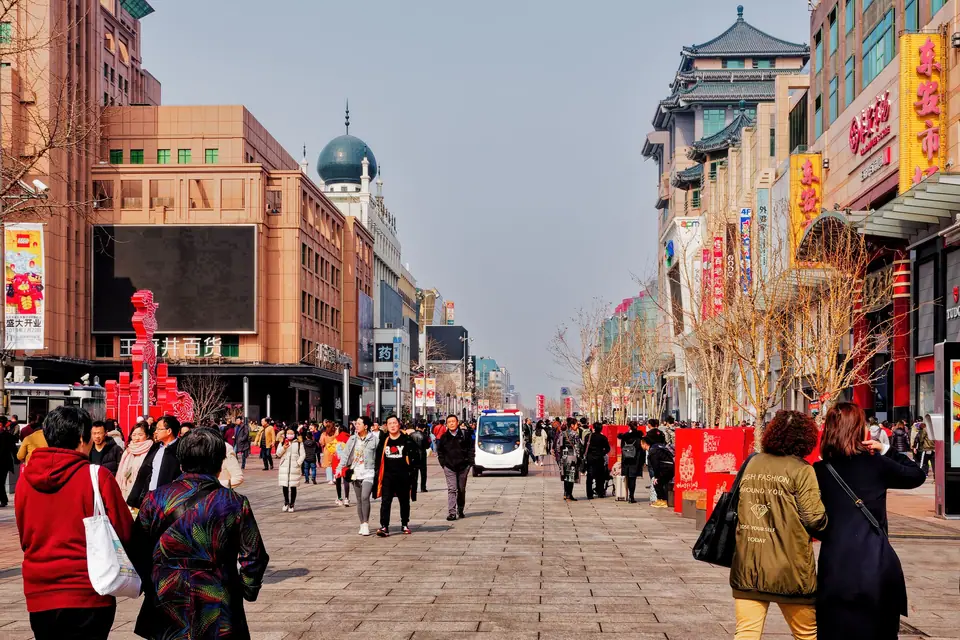
Wangfujing and Donghuamen: Pedestrian Boulevard and Pastry Halls
Strolling Beijing's historic shopping boulevard from the Ming Sweet-Water Well to St Joseph's Church and Daoxiangcun pastry boxes.
Running north to south just one long block east of the Forbidden City moat between Chang'an Avenue and the China National Art Museum area (served by Wangfujing Station on Subway Lines 1 and 8 and Jinyu Hutong Station on Line 8), Wangfujing Avenue has been one of Beijing's principal noble and mercantile thoroughfares since the Ming Yongle Emperor built ten princely mansions (wangfu) along this street in the 1410s. The second half of the name, jing (well), comes from a rare freshwater well discovered on the avenue when almost every other well inside the walled city yielded brackish water; look down at the paving near the southern pedestrian section to spot the circular bronze manhole plaque marking the original Wangfujing Sweet-Water Well.
Historic landmarks along the pedestrian spine
Although tourists sometimes confuse Wangfujing with the old open-air Donghuamen scorpion-snack stalls (which closed permanently years ago to restore the calm palace moat avenue), the boulevard today combines historic architecture, flagship bookstores and time-honoured Beijing provisioners:
- Beijing Department Store (Baihuo, Baihuo Dalou): opened in 1955 as the first state-run department store of the new republic, recognizable by its clock tower; its underground levels recreate a nostalgic 1980s Beijing hutong neighborhood known as HepingGuoju (Peace Confectionery).
- St Joseph's Church (Wangfujing Church, or Dongtang / East Church): midway up the eastern side of the avenue stands a striking 1904 grey-brick Romanesque Revival cathedral with three rose-window towers opening directly onto a broad brick plaza where couples pose for wedding photographs and locals dance in the evening.
- Wangfujing Bookstore and Foreign Languages Bookstore: two multi-storey book palaces stocking English-language translations of Chinese classics, art monographs and architecture albums.
Packing a box of Daoxiangcun pastries and walking to Donghuamen
Do not leave the neighbourhood without stepping into an authentic branch of Beijing Daoxiangcun (look specifically for the three-character logo at the top of the sign) to hand-pick a red gift box of flaky northern pastries by weight: ox-tongue savoury pepper pastries (niushebing), jujube-paste flower cakes (zaohu, zaohuasu), lotus-seed cakes and matcha pockets. When you are ready to visit the palace or dine on Peking roast duck, walk ten minutes west down Donghuamen Avenue alongside red-walled imperial archives to reach the tranquil eastern corner turret and willow-lined moat of the Forbidden City.
Traveller tips
Real advice from people who have been to Wangfujing and Donghuamen: Pedestrian Boulevard and Pastry Halls. Every tip is read by our team before it goes live.
No tips yet. Been here? Yours could be the first.
Thank you! Your tip will appear here after a quick review.
More in Beijing
Continue exploring Beijing with related neighbourhood, food, and planning guides
High-Speed Bullet Trains from Beijing: Stations and 12306 Tickets
Beijing, China
Universal Beijing Resort: Kung Fu Panda, Transformers and Metro Access
Beijing, China
Chengde Mountain Resort Day Trip: Qing Lakes and Eight Outer Temples
Beijing, China
Tianjin Day Trip from Beijing: Five Great Avenues and Hai River
Beijing, China
