Fragrant Hills (Xiangshan Park): Autumn Red Leaves and Cableway
Climbing Incense Burner Peak in the Western Hills for autumn red leaves, Qing garden pavilions and Biyun Temple.
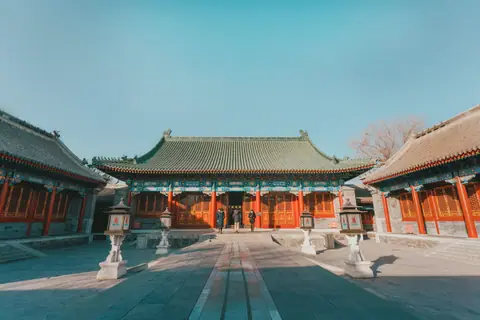
Twenty kilometres northwest of central Beijing on the eastern flank of the Western Hills (Xishan), Fragrant Hills Park (Xiangshan Gongyuan) is a 160-hectare imperial forest park whose history stretches back to the Jin dynasty in 1186 and reached its peak under the Qing Qianlong Emperor as the Jingyiyuan (Garden of Tranquil Pleasure). Although many visitors assume the name comes from scented blossoms, the park is actually named after its highest summit, Xianglufeng (Incense Burner Peak, 575 metres), where two massive rounded boulders at the crest resemble a bronze temple censer frequently wreathed in morning mountain mist.
Autumn smoke-tree foliage versus tranquil spring and summer walks
From mid-October to early November, Xiangshan hosts Beijing's most famous autumn ritual: viewing the fiery red leaves of more than a hundred thousand smoke trees (huanglu, Cotinus coggygria) planted across the southern slopes, mixed with scarlet maples and golden ginkgos. If you visit during the peak red-leaf fortnight, go exclusively on a Tuesday, Wednesday or Thursday morning and reserve your ticket online in advance, as autumn weekends draw immense local crowds. Outside October, Xiangshan is a cool, pine-scented mountain sanctuary where temperatures sit several degrees lower than the paved city centre.
Choosing between the northern chairlift, middle trail and southern ridge
- The Northern Open Chairlift (18 minutes to the summit): turning right inside the North Gate brings you to an open two-seat ski chairlift that glides quietly above the pine and smoke-tree canopy right to Incense Burner Peak, offering sweeping views back east toward Kunming Lake at the Summer Palace and the distant China Zun tower.
- Biyun Temple (Temple of Azure Clouds): just outside the park's North Gate stands a magnificent fourteenth-century monastery climbed via six stepped courtyards. Inside its Hall of Five Hundred Arhats sit 508 life-sized gilded wooden statues, while at the highest terrace rises the 34.7-metre white marble Diamond Throne Pagoda (Jingang Baozuota), carved with Tibetan and Sanskrit reliefs and housing the cenotaph where Dr Sun Yat-sen's coffin rested in 1925.
- Shuangqing Villa and Jianxinzhai (Quiet Heart Studio): along the quieter southern and northern valleys lie a semicircular Ming-Qing water courtyard fed by mountain springs and the secluded hillside villa where Mao Zedong lived and worked in the spring and summer of 1949 before moving into the city.
Ride Subway Line 10 to Bagou Station and transfer directly onto the scenic ground-level Western Suburban Tram Line (Xijiao Line) to its final stop at Xiangshan, or pair your morning climb with the neighbouring China National Botanical Garden one tram stop east.
Traveller tips
Real advice from people who have been to Fragrant Hills (Xiangshan Park): Autumn Red Leaves and Cableway. Every tip is read by our team before it goes live.
No tips yet. Been here? Yours could be the first.
Thank you! Your tip will appear here after a quick review.
More in Beijing
Continue exploring Beijing with related neighbourhood, food, and planning guides