


























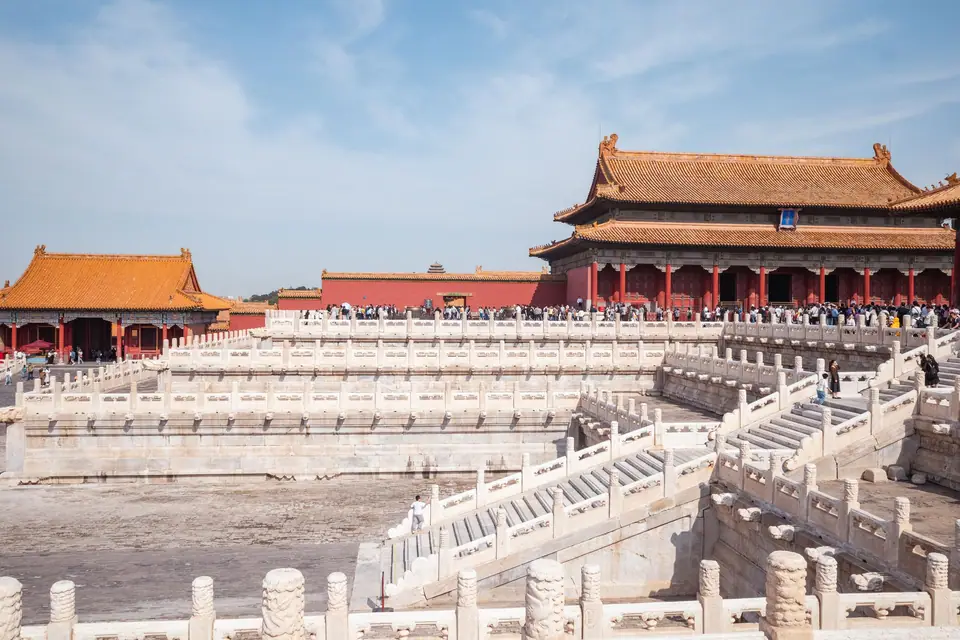
Temple of Heaven (Tiantan): Ritual Altars and Morning Park Life
Exploring the cobalt-blue Hall of Prayer for Good Harvests, the Circular Mound Altar and morning tai chi groves in Tiantan Park.
In the southern half of Dongcheng District, enclosed by a six-kilometre perimeter wall that is curved on the north side to represent heaven and square on the south to represent earth, the Temple of Heaven (Tiantan) covers an area nearly four times the size of the Forbidden City. Constructed in 1420 by the Ming Yongle Emperor, the same ruler who built the palace, this was not a parish temple for ordinary worshippers but an imperial sacrificial complex where the Son of Heaven fasted and prayed twice a year for winter solstice balance and abundant summer grain.
Always buy the through-ticket
One practical detail trips up many visitors at the gate: Tiantan sells a basic park admission ticket and an all-inclusive through-ticket (Lianpiao). Always choose the through-ticket, because the three famous ritual structures inside the park are enclosed by their own inner walls and require that combined pass. Ride Subway Line 5 to Tiantan East Gate Station (or Line 8 to Tianqiao near the West Gate) and arrive in the morning to watch hundreds of local retirees practising tai chi sword forms, choral singing, ribbon dancing and feather-shuttlecock kicking (jianzi) beneath three-thousand ancient cypress and juniper trees.
Walking the sacred axis from north to south
Entering from the East Gate leads you first to the Long Corridor, where locals gather over card games, and then into the court of the Hall of Prayer for Good Harvests (Qiniandian). Rising thirty-eight metres atop a three-tiered white marble terrace without using a single iron nail, its circular wooden frame is supported by twenty-eight massive timber pillars: four central dragon columns representing the four seasons, an inner ring of twelve columns for the months, and an outer ring of twelve for the traditional two-hour divisions of the day, all crowned by deep cobalt-blue glazed tiles symbolising the sky.
From the hall, walk south along the raised 360-metre stone Danbi Bridge (Sacred Way), whose central strip was reserved for the heavenly spirits, the eastern strip for the emperor and the western strip for court ministers. At the southern end stand the single-gabled Imperial Vault of Heaven, encircled by the smooth acoustic Echo Wall and Triple Sound Stones, and finally the open-air Circular Mound Altar (Huanqiu). Built from concentric rings of white marble slabs in multiples of the sacred odd number nine, this open platform is where the winter solstice ceremony took place beneath the bare sky; stand on the round central Heaven Heart Stone to hear your voice echo back off the marble balustrades, then continue across the street to the Hongqiao Pearl Market.
Traveller tips
Real advice from people who have been to Temple of Heaven (Tiantan): Ritual Altars and Morning Park Life. Every tip is read by our team before it goes live.
No tips yet. Been here? Yours could be the first.
Thank you! Your tip will appear here after a quick review.
More in Beijing
Continue exploring Beijing with related neighbourhood, food, and planning guides
The Ming Tombs and Sacred Way: Changling, Dingling and Stone Animals
Beijing, China
White Cloud Temple (Baiyunguan) and Fayuan Temple: Daoist and Tang Courtyards
Beijing, China
Capital Museum and Beijing Planning Exhibition Hall
Beijing, China
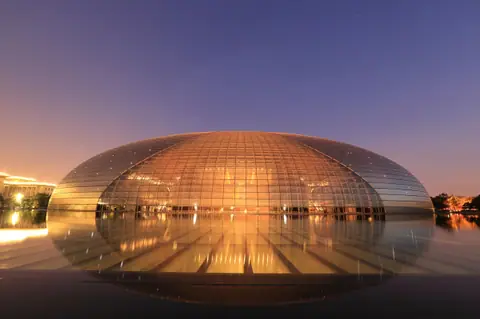
National Centre for the Performing Arts (The Giant Egg): Dome and Concerts
Beijing, China
