


























National Museum of China: Ancient Bronzes and Booking Rules
Securing advance passport entry to the National Museum of China and focusing on the underground Ancient China masterworks.
Flanking the entire eastern flank of Tiananmen Square directly opposite the Great Hall of the People, the National Museum of China (Guojia Bowuguan) is one of the largest museum buildings on the planet, covering nearly two hundred thousand square metres across forty-eight exhibition halls. Formed by merging the former Museum of Chinese History and Museum of the Chinese Revolution, its collection exceeds 1.4 million artefacts. Because trying to see every floor in a single day leads straight to museum exhaustion, the smartest approach is focusing two to three hours on the subterranean masterpiece gallery: Ancient China (Gudai Zhongguo) on level B1.
Advance passport reservations and security entry
Like the Forbidden City just to the north, the National Museum is closed on Mondays and requires an advance real-name reservation linked to your passport number (booked up to seven days ahead via the museum's official website or WeChat mini-programme). A helpful rule for planners: holding a confirmed National Museum booking automatically clears you through the outer security checkpoints around Tiananmen East Subway Station (Line 1) without needing a separate square appointment. Travel light, food, tripods, selfie sticks and power banks over standard airline limits are held at the cloakroom, and enter through the North Gate facing Chang'an Avenue.
Five standout treasures in the Ancient China Gallery (Level B1)
Take the escalators down to Level B1, where Chinese civilisation is laid out chronologically from Neolithic painted pottery to the late Qing dynasty:
- The Houmuwu Ding (Simuwu Ding, Late Shang Dynasty): weighing 832.84 kilograms, this rectangular four-legged bronze sacrificial cauldron cast around 1200 BCE is the heaviest single piece of ancient bronze ritual ware ever unearthed.
- Four-Ram Square Zun (Si Yang Fang Zun, Shang Dynasty): a masterpiece of lost-wax bronze casting where four sculpted mountain rams with curled horns emerge from the corners of a ritual wine vessel.
- Jade Dragon of the Hongshan Culture and Han Jade Burial Suit: an early C-shaped Neolithic jade pendant alongside a Western Han dynasty royal burial suit stitched from more than a thousand jade plaques using fine gold wire.
- Smiling Ceramic Storyteller (Eastern Han Dynasty): a lively terracotta figure from Sichuan beating a drum with an infectious grimace and raised foot.
- Ming Empress Xiaoduan's Nine-Dragon Nine-Phoenix Crown: excavated from the Dingling underground palace at the Ming Tombs, inlaid with glowing blue kingfisher feathers, natural pearls and rubies.
Traveller tips
Real advice from people who have been to National Museum of China: Ancient Bronzes and Booking Rules. Every tip is read by our team before it goes live.
No tips yet. Been here? Yours could be the first.
Thank you! Your tip will appear here after a quick review.
More in Beijing
Continue exploring Beijing with related neighbourhood, food, and planning guides
Wudaoying Hutong: Independent Cafes, Studios and Quiet Courtyards
Beijing, China
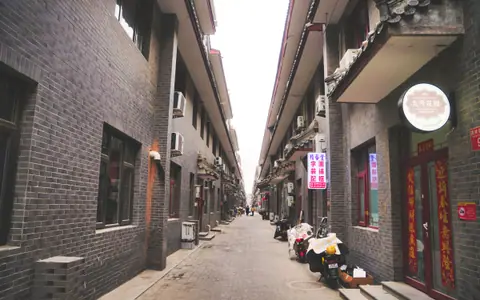
Dashilar and Yangmeizhu Byway: Guild Facades and Bookshops
Beijing, China
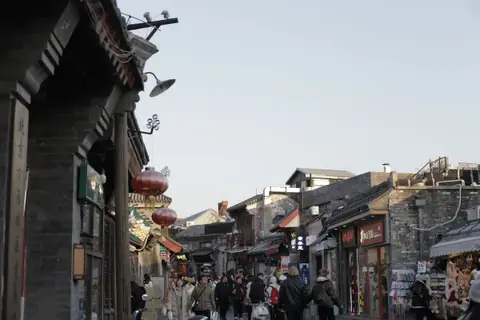
Qianmen Street and Zhengyangmen: Arrow Tower and Time-Honoured Shops
Beijing, China
Prince Gong's Mansion (Gongwangfu): Qing Courtyards and Gardens
Beijing, China
