


























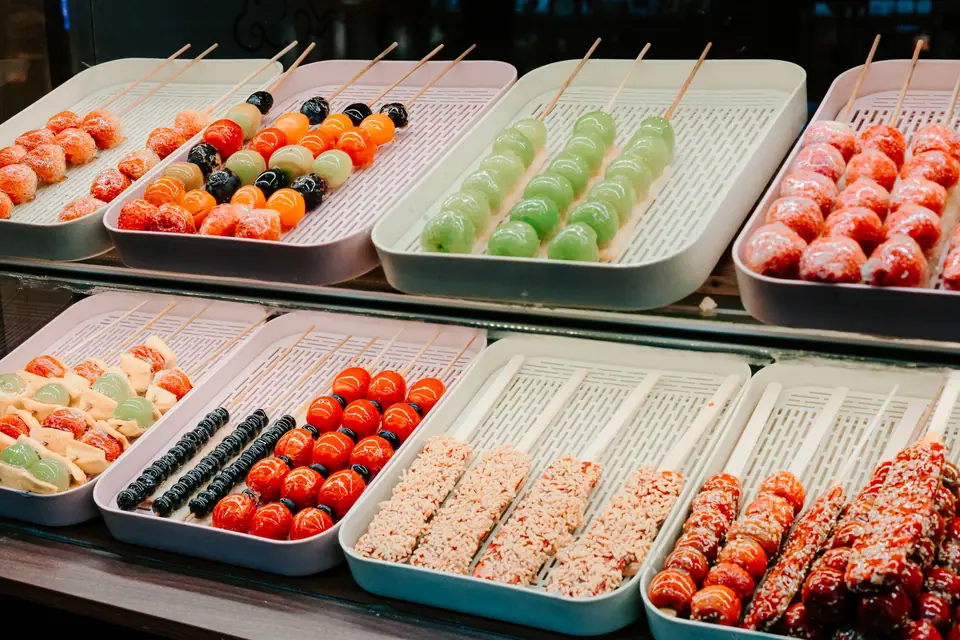
Niujie Muslim Quarter: Mosque Timber Halls and Halal Street Food
Exploring Beijing's oldest Hui Muslim neighbourhood around the thousand-year-old Niujie Mosque and its famous halal food counters.
In the southwestern quadrant of Xicheng District just inside the Second Ring Road (served directly by Niujie Station on Subway Line 19 or Caishikou on Lines 4 and 7), Niujie (Ox Street) is the spiritual and culinary heart of Beijing's historic Hui Muslim community. More than ten thousand Hui residents live around this broad north-south avenue, which takes its name both from its centuries-old halal beef and mutton butchers and as a phonetic evolution of Liujie (Pomegranate Street), after the pomegranate orchards that grew here during the Liao and Jin dynasties.
The Niujie Mosque (founded 996 CE)
Halfway down the eastern side of the avenue stands the Niujie Mosque (Niujie Libaisi), the oldest and largest mosque in Beijing. Founded in 996 CE during the Liao dynasty by Nasruddin, the son of an Arab scholar who settled in the northern capital, and expanded under the Ming Chenghua and Qing Kangxi emperors, the complex is a remarkable architectural synthesis. From the street, its sweeping grey-tiled roofs, red-lacquered timber pillars, upturned eaves and hexagonal Moon-Observing Tower (Wangyuelou) look entirely like a classical Chinese palace temple. Step inside the courtyards, however, and every archway, beam and lintel is adorned with gilded Arabic Quranic calligraphy alongside floral latticework.
The expansive main prayer hall faces west toward Mecca rather than along the north-south Chinese axis, while in the quiet southeastern garden courtyard stand the stone tombs of two thirteenth-century Persian Sufi scholars, Ahmad Burhani and Ali, who passed away while lecturing in Yuan-dynasty Beijing and whose Arabic headstones dated 1280 and 1283 remain intact. Dress modestly (long trousers or skirts covering the knees and covered shoulders; no shorts) to visit the outer courtyards.
What to eat along Niujie and inside the Halal Supermarket
Come hungry, because the pavement windows on both sides of the mosque draw morning queues of Beijingers carrying cloth tote bags:
- Ju Bao Yuan takeaway counter: right beside the famous copper-pot hotpot dining hall, queue at the street window for five-spice braised beef shank (jiangniurou) and golden, flaky baked beef pastries (niurou shaobing).
- Baiji Nian Gao (inside the Niujie Halal Supermarket, Level 1): soft purple-and-white glutinous rice cakes layered with thick, lightly sweetened red bean paste and hawthorn strips, sliced with a wet knife to order.
- Hongji Snack Shop and Yibao: grab piping hot fried beef-and-scallion meat pies (xianbing), crispy sesame-coated fried dough twists (mahua) and osmanthus-scented fermented rice-milk pudding (na, nailao).
Traveller tips
Real advice from people who have been to Niujie Muslim Quarter: Mosque Timber Halls and Halal Street Food. Every tip is read by our team before it goes live.
No tips yet. Been here? Yours could be the first.
Thank you! Your tip will appear here after a quick review.
More in Beijing
Continue exploring Beijing with related neighbourhood, food, and planning guides
Fragrant Hills (Xiangshan Park): Autumn Red Leaves and Cableway
Beijing, China

China National Botanical Garden: Conservatories and Sleeping Buddha
Beijing, China
The Ming Tombs and Sacred Way: Changling, Dingling and Stone Animals
Beijing, China
White Cloud Temple (Baiyunguan) and Fayuan Temple: Daoist and Tang Courtyards
Beijing, China
