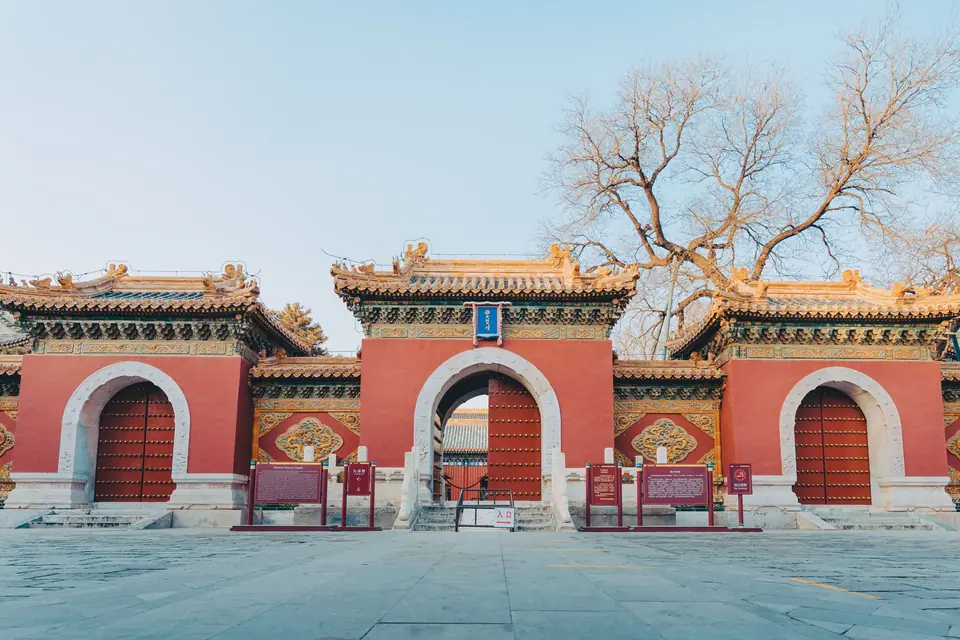
The Ming Tombs and Sacred Way: Changling, Dingling and Stone Animals
Exploring the UNESCO valley of thirteen Ming emperors in Changping, from the stone animal Sacred Way to Changling and Dingling.
Forty-five kilometres north of central Beijing in Changping District, sheltered on three sides by the horseshoe ridge of the Tianshou Mountains like a giant armchair facing south across the plain, lies the UNESCO World Heritage valley of the Ming Tombs (Ming Shisanling). After the Ming Yongle Emperor moved the imperial capital from Nanjing to Beijing and built the Forbidden City, court geomancers selected this tranquil forty-square-kilometre basin as the dynastic necropolis. Between 1409 and 1644, thirteen of the sixteen Ming emperors were buried in separate walled palace-tomb complexes around the valley perimeter. Because the monuments sit several kilometres apart, concentrate your visit on the three ticketed highlights connected by local shuttle buses: the Sacred Way, Changling and Dingling.
The Sacred Way (Shendao): Stone Animals and Dragon-and-Phoenix Gate
Every imperial funeral procession entered the valley from the south along the seven-kilometre Sacred Way. Begin at the 1540 Great Stone Archway (Shipaifang), the widest six-pillar carved white marble archway in China, and pass through the Great Red Gate (where emperors themselves had to dismount from their horses) to the giant 1435 tortoise-borne stele pavilion. Beyond it stretches an 800-metre willow-lined avenue guarded by twenty-four monolithic carved limestone animals (lions, mythical xiezhi, camels, elephants, qilin and horses, alternating standing and kneeling in pairs so one pair could stand guard by day and the other by night) followed by twelve Ming civil, military and merit officials.
Changling (the Yongle Emperor's timber masterpiece) and Dingling (the underground palace)
- Changling (Tomb of the Yongle Emperor, built 1409): the oldest, largest and grandest surface complex in the valley. Its crowning glory is the Hall of Eminent Favour (Ling'endian), modelled directly on the Forbidden City's Hall of Supreme Harmony and supported by sixty unpainted pillars made from whole trunks of fragrant golden-thread nanmu wood (jinsinanmu) floated up the Grand Canal from the forests of Sichuan and Yunnan; the four central pillars measure well over a metre across.
- Dingling (Tomb of the Wanli Emperor, built 1584 to 1590): the only Ming imperial tomb ever excavated by archaeologists (in 1956). Descending twenty-seven metres down spiral stairs beneath the earth mound brings you into the 1,195-square-metre vaulted stone Underground Palace (Digong), sealed behind five self-locking white (Hanbaiyu) marble doors and housing three marble thrones, blue-and-white dragon oil-lamp jars and replica coffins of the Wanli Emperor and his two empresses.
Ride the Changping Subway Line to Changping Dongguan Station and take Bus 314 (which links the Sacred Way, Dingling and Changling in order), or pair the tombs with a morning hike at the Mutianyu or Badaling Great Wall.
Traveller tips
Real advice from people who have been to The Ming Tombs and Sacred Way: Changling, Dingling and Stone Animals. Every tip is read by our team before it goes live.
No tips yet. Been here? Yours could be the first.
Thank you! Your tip will appear here after a quick review.
More in Beijing
Continue exploring Beijing with related neighbourhood, food, and planning guides