


























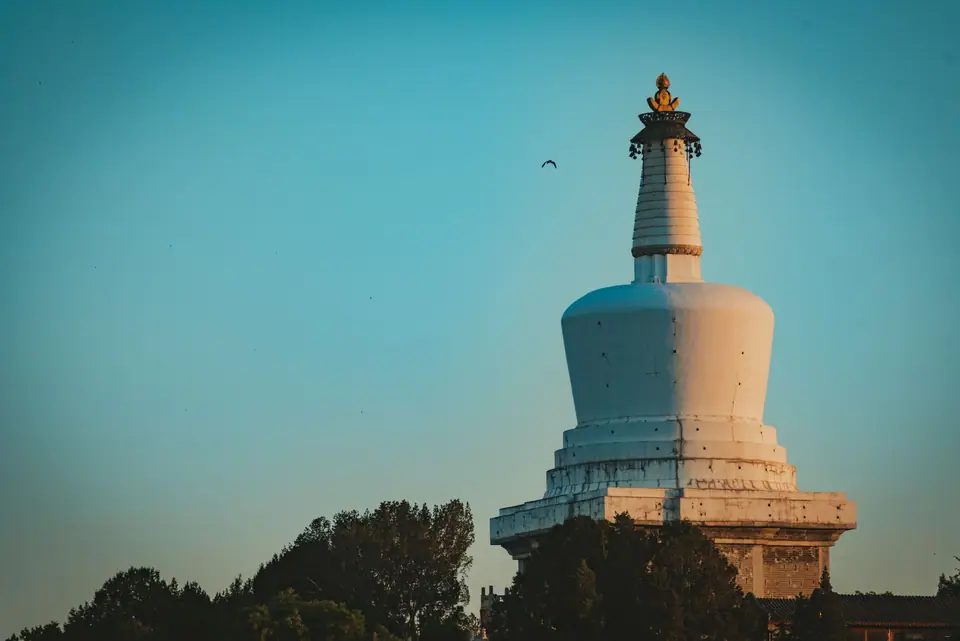
Drum and Bell Towers (Gulou and Zhonglou): Imperial Timekeeping
Climbing the Ming-dynasty Drum and Bell Towers at the northern head of the Central Axis to learn how imperial Beijing kept time.
Anchoring the northern head of the 7.8-kilometre Beijing Central Axis, the vermilion wooden Drum Tower (Gulou) and the austere grey brick-and-stone Bell Tower (Zhonglou) stand one hundred metres apart across a paved courtyard square that locals use all afternoon for kicking feathered shuttlecocks and chatting in the sun. For more than six hundred years across the Yuan, Ming and Qing dynasties, before mechanical pocket watches existed in households, these two lofty towers functioned as the official civic clock of the capital, governing when the nine inner city gates locked at dusk and unlocked at dawn.
How the morning bell and evening drum worked
Originally built in 1272 under Kublai Khan slightly to the west and rebuilt on their present alignment in 1420 by the Ming Yongle Emperor, the towers operated under the classical formula of Morning Bell, Evening Drum (Chenzhong Mugu). At dusk (around seven in the evening), the watchmen climbed the Drum Tower to strike a sequence of 108 deep beats on twenty-five oxhide drums (one main drum for the year and twenty-four smaller drums for the solar terms), signalling the start of the first night watch and the closing of the city gates. Every two hours through the night, the drum sounded again to mark the five night watches (wugeng), until at dawn the giant bronze bell in the northern tower rang out 108 times across the sleeping hutongs.
Climbing the sixty-nine steps of Gulou and Zhonglou
Buy the combined ticket at the ground-level window to climb both monuments, and be prepared for a calf workout: each tower is reached via a single, straight stone staircase set inside the massive masonry base at a near-seventy-degree angle, rising sixty-nine high steps to the upper gallery with dual metal handrails on either side.
- Inside the Drum Tower (Gulou): the upper timber hall displays the solitary surviving Ming-Qing Night Watchman's Drum alongside replica drums used for energetic ten-minute live drumming demonstrations held several times a day, plus reconstructions of ancient copper water clocks (clepsydras) and incense time-burners. Step out onto the external balcony for a bird's-eye view straight down Di'anmen Outer Street toward Jingshan Park and over the interlocking grey-tile roofs of the surrounding courtyards.
- Inside the Bell Tower (Zhonglou): rebuilt in 1745 entirely of vaulted brick and stone to prevent fire and amplify acoustics, the upper chamber suspends the 63-tonne Yongle Bronze Bell, the heaviest ancient cast bronze bell in China, whose resonant chime once carried twenty kilometres across the plain.
After descending, stroll through the side alleys between the two towers into Shichahai or east into the quiet residential lanes off Nanluoguxiang.
Traveller tips
Real advice from people who have been to Drum and Bell Towers (Gulou and Zhonglou): Imperial Timekeeping. Every tip is read by our team before it goes live.
No tips yet. Been here? Yours could be the first.
Thank you! Your tip will appear here after a quick review.
More in Beijing
Continue exploring Beijing with related neighbourhood, food, and planning guides

Qianmen Street and Zhengyangmen: Arrow Tower and Time-Honoured Shops
Beijing, China
Prince Gong's Mansion (Gongwangfu): Qing Courtyards and Gardens
Beijing, China

National Museum of China: Ancient Bronzes and Booking Rules
Beijing, China
798 Art District (Dashanzi): Bauhaus Factories and UCCA
Beijing, China
